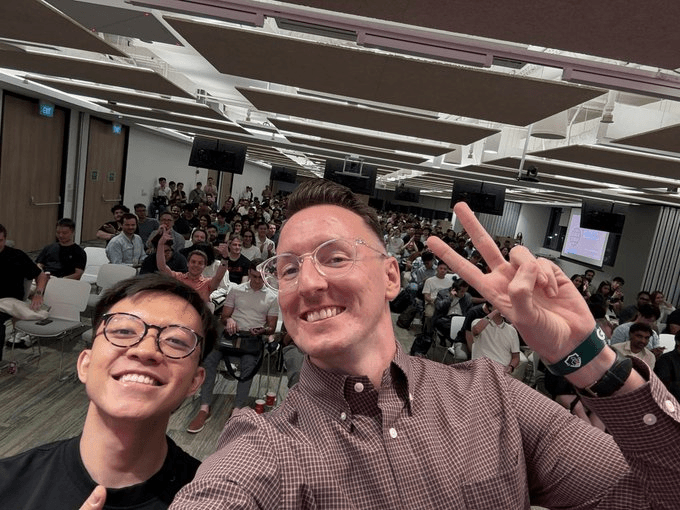

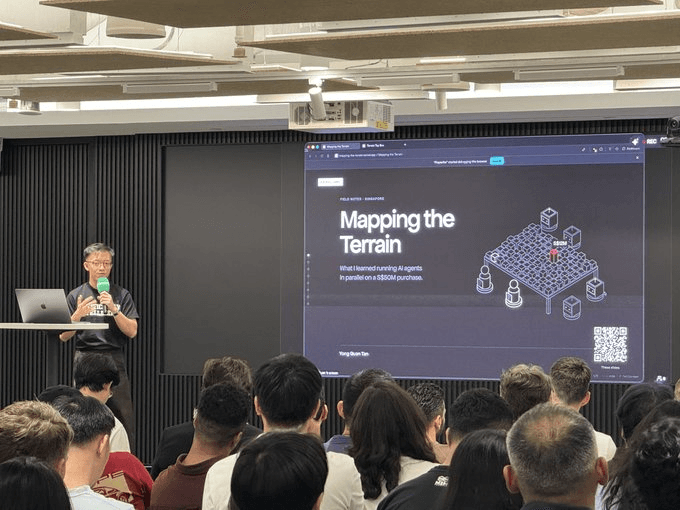
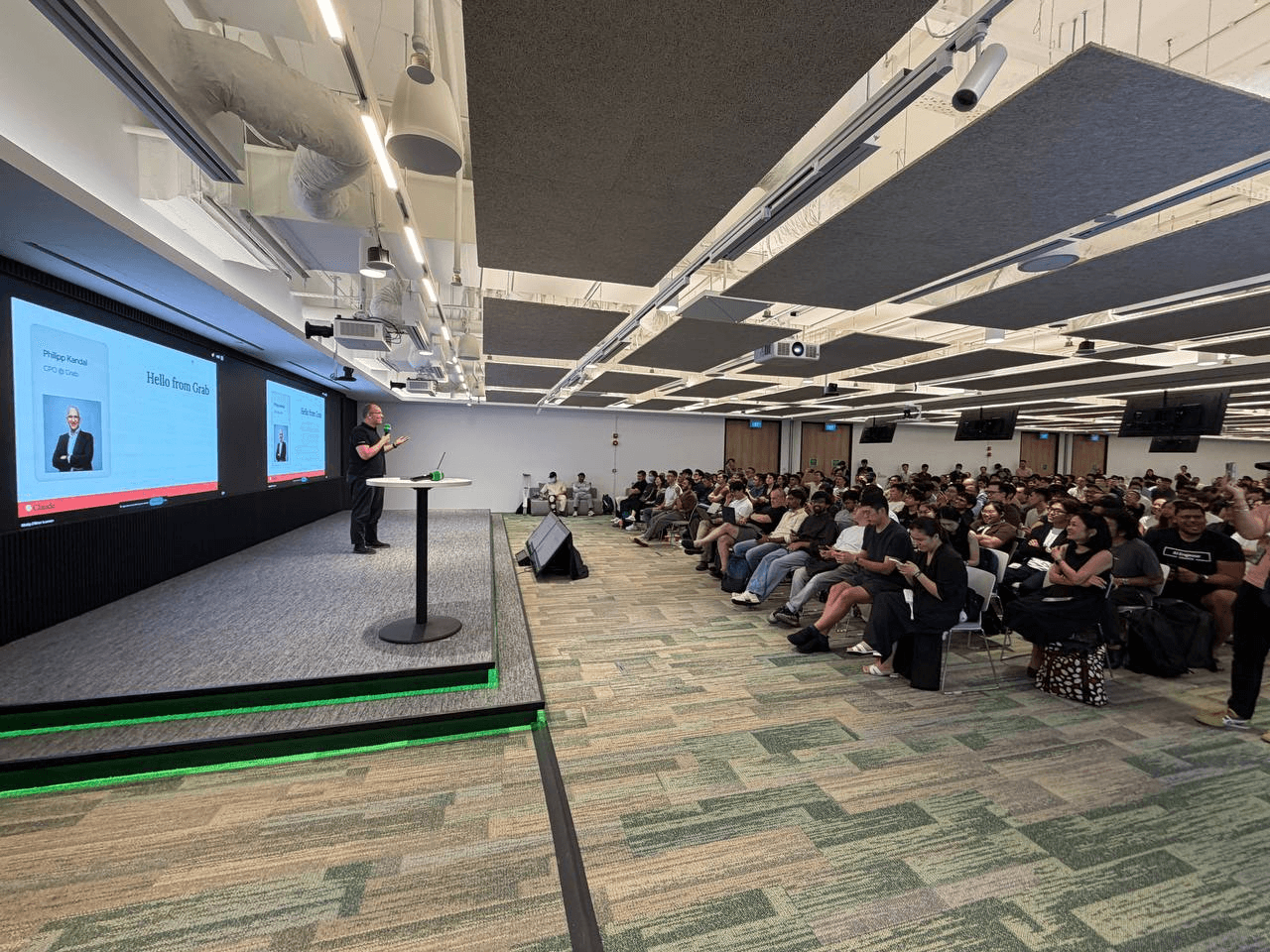
On 13 October I gave a talk called Mapping the Terrain at a Claude Meetup in Singapore, with Anthropic and Grab. The event drew 700 registrations. The talk used one S$50M purchase to ask a bigger question: what changes when an agent owns an outcome, not just a task?
What gets handed over
A purchase like this runs to thousands of line items across several vendors. The job isn't "summarise these quotes". It's: work out which quotes can be compared, which can't, and why.
In my example spreadsheet, one laptop line reads S$12M while the other quotes sit around S$500,000. It could be a typo, or a different scope. The agent's job is to find out, then bring the one open question to the person who can decide.
That only works if the agent can see the evidence, has enough authority to keep moving, and a person is reachable when it reaches a call it shouldn't make.
Man machine equilibrium
Agents carry the investigation. People bring context, settle questions of scope, and decide when the evidence is enough. The balance depends on how work reaches a person: twelve line items may share one unresolved assumption. Settle it once and the agents continue across all twelve. Twelve separate alerts would only burn attention.
Silas Yeem picked up on this in his reflection on the talk: directing the right cases to human reviewers could reduce cognitive overload and decision fatigue in work that still depends on domain judgment.
Beyond the spreadsheet
After the talk, someone asked how this would apply to medical research, which is far more open-ended than a purchase. My answer: agents can give open-ended work more structure, and structure makes it more verifiable. The idea is workflow design. Build the evals into the workflow, and keep a living list of how assumptions change through the experiment.
We're building something like this ourselves: an IT admin agent. Every tool has its own access control, and accounting for all of it makes the work effectively open-ended. My view is that intelligence guided by useful human priors yields higher success rates and lower reviewer burden.
The organisation has to change too
Adopting agents means deciding which outcomes to entrust to them, how much authority comes with that work, and how people take part as it progresses. Those are decisions about the organisation itself. Buying access to a model leaves them unanswered.
Agents can own an outcome, but only if the organisation makes room for them.